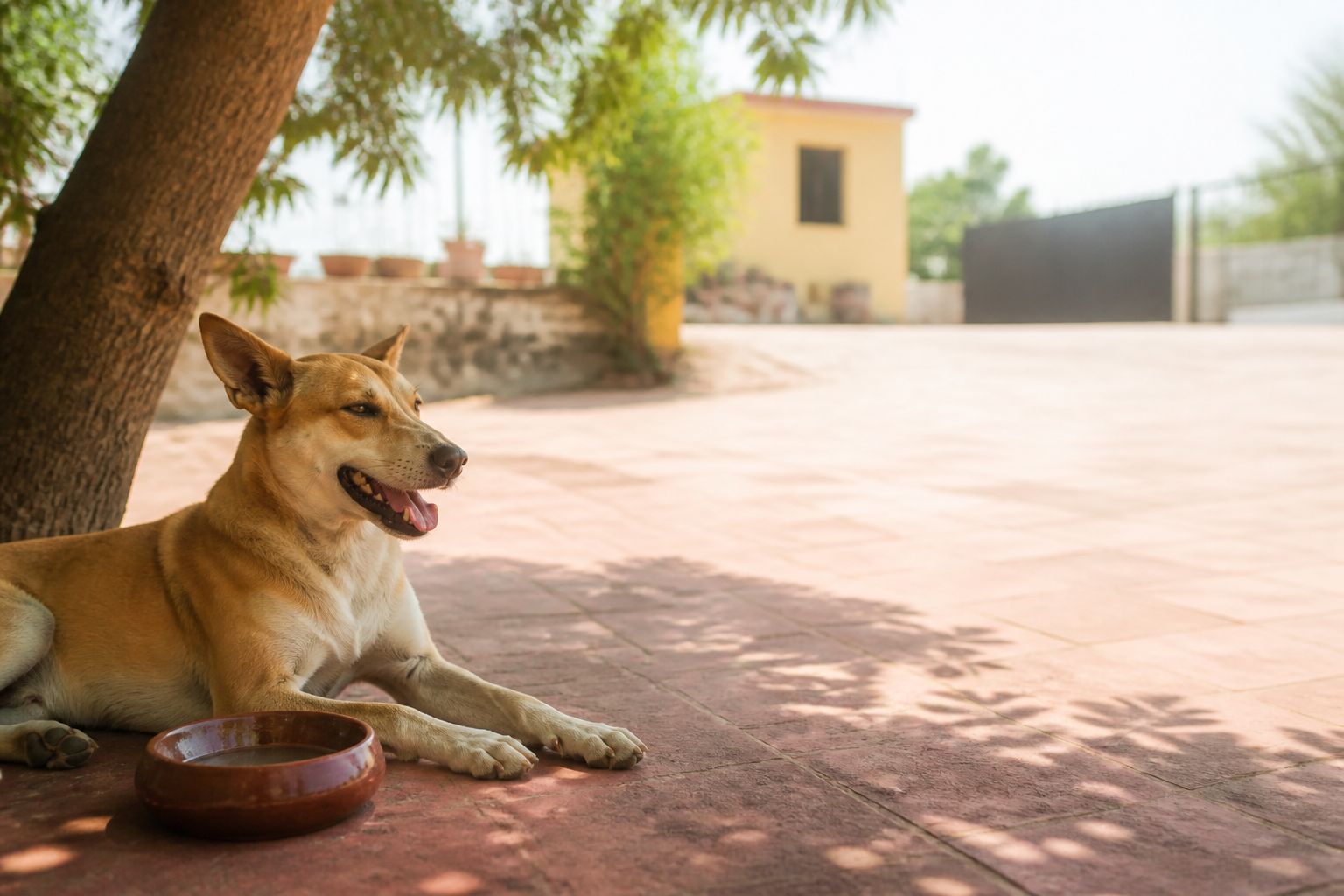
Indore’s summer is not a mild inconvenience for pets — it is a real management challenge. Hot afternoons, sun-baked roads around Navlakha and Navlakha, terrace heat, and the temptation to run “just one quick errand” with a dog in the car all raise the risk of heat stress.
This guide from Happy Tails Pet Clinic focuses on practical summer heat safety for pets in Indore: smarter walk timing, pavement and terrace checks, why cars are dangerous, how to recognise trouble early, and calm first-response steps while you contact the clinic. It is general education, not a substitute for hands-on veterinary care when your pet is in distress.
How pets handle heat (and why Indore days feel harder)
Dogs and cats cool differently from humans. Dogs rely heavily on panting. Cats pant less often and may hide discomfort until they are quite unwell. Humidity, direct sun, poor airflow, obesity, thick coats, very young or senior age, heart or respiratory disease, and flat faces (brachycephalic breeds) all make cooling harder.
A pet that “always loved noon walks” in January may not tolerate the same routine in May. Adjust expectations with the season, not with last year’s habits.
Walk timing: the single highest-impact habit
Prefer cooler windows
For most Indore dogs:
- Walk early in the morning before roads store heat
- Use later evening after surfaces have begun to cool
- Keep midday outings short, shaded, and purposeful (toilet breaks), not exercise sessions
Watch your dog’s pace. Lagging, seeking shade constantly, or insisting on lying on cool floors mid-route are messages to end the walk.
Intensity matters as much as clock time
Fetch on open terraces, long jogs beside traffic, and “weekend adventure” hikes in peak sun stack heat load quickly. Save vigorous play for cooler hours. Indoor puzzle toys and training games can burn mental energy when outdoor sport is unsafe.
Pavement, terraces, and paw safety
Asphalt and concrete can burn paw pads even when the air feels merely warm to you.
Quick surface check
Press the back of your hand on the pavement for several seconds. If you want to pull away, skip that route. Seek grass belts, shaded lanes, or wait for cooler temperatures.
Terrace caution
Metal bowls, dark flooring, and unshaded terraces become ovens. Provide shade structures, non-scorching resting mats, and constant access to fresh water. Never leave a pet confined on an exposed terrace “for breeze” during peak heat.
After-walk paw care
Rinse dusty paws, check for cracks or blisters, and watch for limping. Persistent pad injuries need a veterinary look rather than only home creams.
Water, shade, and indoor cooling
Water access
Offer clean water in more than one location. Some pets drink more from wide bowls; others prefer running taps — what matters is easy, frequent access. Carry water on longer outings.
Shade and airflow
Cross-ventilation, fans positioned safely (cords and blades out of reach), and cool tile resting spots help. Avoid pointing strong airflow in a way that knocks over anxious pets or creates chaotic noise for cats.
Cooling myths to skip
- Do not force ice-cold immersion for a collapsed pet without veterinary guidance — abrupt extremes can be harmful; aim for controlled cooling described later while you seek help
- Do not rely on frozen treats alone as heatstroke prevention
- Do not shave double-coated breeds without advice; coat structure can provide insulation against heat as well as cold — ask your vet what suits your dog
Cars: a hard rule for Indore errands
A parked car heats rapidly. Cracked windows do not make a safe kennel. Shade moves. Errands expand. Pets left “for five minutes” can face life-threatening temperatures.
Best practice: leave dogs and cats at home in a cool room. If your pet must travel, keep trips short, park in shade only when someone stays with the animal and the cabin stays cool, and never use the vehicle as a waiting room while you shop.
If you see a pet in distress in a hot car, notify local authorities or nearby shop staff and seek help promptly — and apply the same urgency mindset to your own household habits.
Cats in Indore summers
Indoor cats still overheat in closed rooms with poor airflow. Watch for sprawling on tiles, reduced appetite, restlessness, or open-mouth breathing (always urgent in cats). Ensure water fountains or multiple bowls, limit sun-trap window perches at noon if rooms become stifling, and never leave cats in carriers in parked vehicles.
Outdoor and balcony access needs secure screens and shaded retreats. Hot railings and metal surfaces burn.
Who needs extra caution
- Flat-faced breeds (breathing already works harder)
- Overweight pets
- Seniors and very young animals
- Pets with heart, laryngeal, or chronic respiratory issues
- Dark-coated dogs in full sun
- High-drive working breeds that ignore their own fatigue
These pets need shorter outings, stricter midday limits, and earlier veterinary contact if heat stress signs appear.
Recognising heat stress and heatstroke
Heat-related illness exists on a spectrum. Early intervention is easier than waiting until the pet collapses.
Warning signs
- Excessive panting that does not settle with rest in shade
- Thick drool or foaming
- Bright red, pale, or muddy gum colour changes
- Glazed eyes, anxiety, or confusion
- Vomiting or diarrhoea
- Wobbliness, collapse, or seizures
- Body feeling very hot to the touch
Any combination that looks “not themselves plus heat exposure” deserves urgent veterinary contact. Do not wait to see if a nap fixes collapse.
General first aid while you contact the clinic
This is supportive first response, not a complete treatment plan. Heatstroke can damage organs; pets who seem to improve can still deteriorate. Always arrange veterinary assessment.
While you WhatsApp or call Happy Tails on 9244089800:
- Move your pet immediately to shade or a cool indoor room
- Offer small amounts of water if the pet is conscious and able to swallow — do not force water into the mouth
- Loosen or remove heavy collars or muzzles that restrict panting if safe to do so
- Wet the coat with cool (not ice-cold) water, focusing on neck, armpits, and groin — use room-temperature to cool water rather than ice packs directly on skin for prolonged periods unless a vet instructs otherwise
- Use a fan on damp fur to help evaporative cooling if available
- Prepare for transport: carrier with airflow, towel, phone for updates
- Do not give human fever medicines, alcohol rubs, or unverified online “remedies”
Tell the clinic what happened (duration of exposure, breed, age, signs, any vomiting or collapse). That information helps the team prepare.
If your pet is unconscious, having seizures, or struggling severely to breathe, move carefully, keep the airway as clear as practical, and seek veterinary help without delay.
Home setup checklist for Indore summer
- Fresh water refreshed through the day
- At least one genuinely cool resting zone
- Walk schedule shifted to cooler hours
- Paw-safe route options identified
- No unattended car waiting
- Curtains or shade for the hottest window bays
- Parasite prevention continued (hot weather does not pause ticks)
- Clinic number saved: Happy Tails 9244089800
Travel and family gatherings
Weddings, day trips, and market visits peak around holidays. Plan pet care before the outing: a trusted person at home beats a crowded, hot venue. If boarding or pet-sitting, ask specifically about shade, water, and midday exercise policies.
Grooming, coats, and summer skin
Mats trap heat and moisture against the skin. Regular gentle grooming — not extreme shaving on impulse — helps air reach the coat. Watch for hot spots, redness, and excessive scratching after humid days. Fresh flea and tick prevention still matters in warm weather; heat stress and parasite irritation can stack.
If you are unsure whether a trim style suits your breed’s coat type, ask during a consultation rather than copying a social media cut that removes protective layers.
Apartment and society living in Indore
Many pets in Navlakha, Navlakha, and nearby societies share lifts, parking basements, and gated gardens. Basements can feel cooler but may have poor airflow and vehicle exhaust — keep toilet trips brief. Garden grass helps paws, yet unshaded lawns at noon still radiate heat. Carry a foldable bowl, choose the shadier perimeter path, and skip “pack walks” that turn into endurance tests.
Neighbours’ fireworks or wedding loudspeakers can push anxious dogs into frantic pacing that raises body temperature. A quiet indoor plan for noisy evenings is part of heat safety, not only rain planning.
After a hot day: reset without overcorrecting
If your pet had a hard afternoon — heavy panting after a delayed walk, reluctance on pavement, or frantic drinking — cool the environment, offer water, and observe closely for the next few hours. If recovery is incomplete, gums look odd, vomiting starts, or energy stays flat, contact the clinic. One scary evening is also a prompt to redesign tomorrow’s schedule, not a reason for guilt without a plan.
Soft next step
If your pet already shows heavy panting after short walks, avoids pavement, or had a scare after a hot outing, a calm checkup can review fitness, weight, breathing, and seasonal routines before the next heatwave stretch.
For serious overheating, contact Happy Tails Pet Clinic in Navlakha, Indore, without delay — WhatsApp 9244089800 while you begin safe cooling. Dr. Rashmi Khandelwal and the team are also here for everyday summer planning questions. Heat safety is mostly preparation; when that fails, swift clinic contact is the kindest choice you can make.
Frequently asked questions
What time should I walk my dog in Indore summer?
Prefer early morning and later evening when air and pavement are cooler. Midday walks on exposed roads raise heat and paw-burn risk.
Can I leave my pet in a parked car for a few minutes?
No. Car interiors heat quickly even with windows cracked. Leave pets at home in a cool room instead of waiting in vehicles.
How do I check if pavement is too hot for paws?
Place the back of your hand on the surface for several seconds. If it is uncomfortable for you, it is too hot for paws. Choose grass, shade, or cooler hours.
What are early signs of heat stress in pets?
Heavy panting, drooling, restlessness, bright red gums, weakness, vomiting, or collapse can signal dangerous overheating. Move to shade and contact a veterinarian urgently.
Are flat-faced breeds at higher risk?
Yes. Brachycephalic dogs and some flat-faced cats cool less efficiently and need stricter heat limits, shorter outings, and closer monitoring.
Related reading & services
Concerned about your pet?
Our team at Happy Tails is ready to help with a calm consultation and a clear next step.