Cats rarely complain the way dogs do. When something hurts or feels wrong, many cats quietly change how they eat, toilet, rest, or interact with the household. That is why cat behaviour changes are often the first — and sometimes the only — clue that a veterinary visit is needed.
At Happy Tails Pet Clinic in Navlakha, Indore, Dr. Rashmi Khandelwal regularly sees families who assumed a litter accident or sudden hiding was “just attitude.” Sometimes it is stress. Often it is pain, urinary disease, dental discomfort, gastrointestinal upset, or another medical issue that deserves a calm, thorough exam.
This guide helps Indore cat parents sort everyday quirks from red flags — with special attention to litter box problems, hiding, appetite shifts, and male cat urinary straining that must never wait.
Why cats show illness through behaviour
Cats evolved as predators who also had to avoid becoming prey. Showing weakness was risky, so many cats mask early discomfort. Instead of limping dramatically or crying constantly, they may:
- Use the litter box less reliably
- Hide under beds or in cupboards
- Eat less, graze oddly, or beg then walk away
- Sleep more — or pace and vocalise at night
- Groom less (dull coat) or over-groom one spot
- Become clingy, irritable, or avoid being picked up
None of these changes prove a diagnosis on their own. They do mean your cat’s body or mind is signalling a shift. The safest approach is to treat new behaviour as information, not defiance.
Litter box changes: medical first, training second
Litter box problems are among the most common reasons owners seek help — and among the easiest to mislabel as “behaviour only.”
What counts as a litter box red flag
Watch for:
- Urinating or defecating outside the box
- Frequent trips to the box with little result
- Straining, crying, or lingering in a hunched posture
- Blood-tinged urine on litter or floors
- Sudden preference for cool surfaces (tiles, sinks, bathtubs)
- Avoiding a box that was previously used without issue
Painful urination can make a cat associate the box with discomfort. The cat then chooses a quieter or cooler spot. From the outside it looks like a preference change. From the cat’s perspective it is problem-solving.
Common medical drivers (examples, not a checklist to self-diagnose)
A veterinarian may consider urinary tract inflammation, crystals or stones, infection, constipation, diarrhoea, arthritis that makes climbing into a high-sided box hard, kidney disease, diabetes-related thirst and urination changes, and more. The right workup depends on age, sex, history, and exam findings — not on internet guesses.
What you can usefully note before the visit
Bring clear notes:
- When the accidents started
- Whether urine, stool, or both are involved
- How often the cat visits the box
- Any crying, blood, or strong odour
- Recent diet changes, new pets, moves, or construction noise
- Photos of the box setup (number of boxes, location, litter type)
This history helps Dr. Rashmi focus the consultation and decide whether urine testing, imaging, or other steps are useful.
Important: Do not punish litter accidents. Punishment raises stress and can worsen both medical and behavioural loops.
Hiding, withdrawal, and “my cat disappeared”
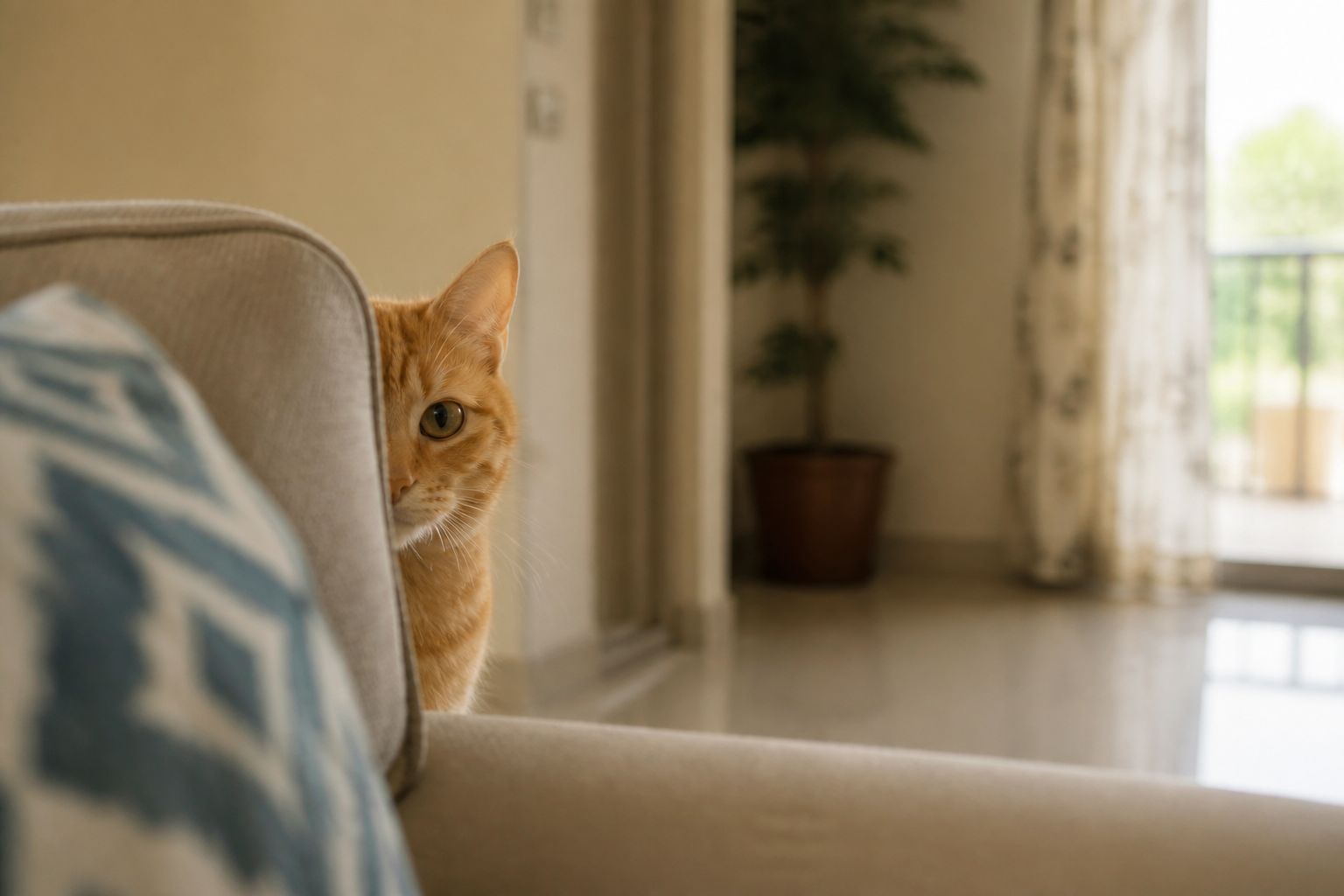
A cat who suddenly lives under the bed is communicating. Mild hiding after a noisy festival evening or a new guest may settle. Persistent withdrawal paired with other signs needs attention.
When hiding is more concerning
Seek veterinary advice sooner if hiding comes with:
- Reduced appetite or water intake
- Vomiting, diarrhoea, or constipation signs
- Laboured breathing or open-mouth breathing
- Limping or reluctance to jump
- Aggression when touched in a specific area
- A glazed, distant look or extreme lethargy
Painful mouths, abdominal discomfort, fever, respiratory illness, and injury can all make solitude feel safer than the living room.
Separating fear from illness
Fearful cats may hide when visitors arrive and reappear when the house is quiet. Ill cats often hide even in familiar, calm conditions — and may skip meals they would normally enjoy. If you are unsure, a wellness check is kinder than waiting for a crisis.
Appetite and drinking changes
Food and water are daily vital signs you can observe at home.
Appetite loss
Skipping one snack after a rich treat is common. Refusing meals for more than about a day — especially in an overweight cat — should prompt a call. Prolonged anorexia can lead to serious secondary problems; your vet can explain risks for your individual cat rather than relying on generic timelines from social media.
Watch also for:
- Approaching the bowl then turning away (possible nausea or dental pain)
- Chewing on one side of the mouth
- Dropping food
- Drooling or pawing at the face
Dental disease is a frequent, under-recognised cause of “picky” eating. Bad breath, tartar, and reluctance to chew hard food are clues worth examining properly.
Increased appetite or thirst
Eating more while losing weight, or drinking far more than usual, can signal metabolic disease. Do not assume it is “just greed” or hot weather alone. A pet checkup with history and appropriate tests gives clarity.
Food puzzles vs medical workups
Enrichment and slow feeders help many healthy cats. They do not replace a veterinary exam when appetite or thirst has clearly changed from your cat’s normal baseline.
Male cat urinary blockage: treat straining seriously
Male cats have a narrower urethra. When inflammation, plugs, or crystals obstruct urine flow, the bladder cannot empty. This is life-threatening.
Warning signs that need same-day veterinary care
- Repeated straining in the litter box with little or no urine
- Crying while posturing to urinate
- Restlessness, hiding, or sudden aggression
- Licking the genital area excessively
- Vomiting, lethargy, or a painful, firm belly
- Collapse or extreme weakness
If you are unsure whether any urine is coming out, err on the side of urgency. WhatsApp or call Happy Tails on 9244089800 while you prepare to travel, and describe what you are seeing so the team can guide you.
Do not wait overnight “to see if it passes.” Do not give human painkillers or leftover antibiotics. Supportive care and unblocking, when needed, must be done by a veterinarian.
Female cats can also have painful urinary disease and deserve prompt care — but complete obstruction is especially feared in males, which is why this section is emphasised.
Other behaviour shifts worth a consult
Night-time yowling
Senior cats may vocalise more with sensory decline, cognitive changes, or hypertension-related issues. A exam helps sort medical contributors from simple attention-seeking.
Over-grooming or fur loss
Itchy skin, fleas, allergies, and pain can drive licking. Bald patches or raw skin need evaluation rather than only a new shampoo.
Aggression or clinginess that is new
Pain changes personality. A gentle cat who growls when lifted may have a sore spine, abdomen, or mouth. Sudden clinginess can also accompany nausea or anxiety.
Litter box “spraying” vs toileting
Vertical spraying of small amounts of urine often has a different context than squatting to empty the bladder on the floor. Both still benefit from ruling out medical disease, then addressing environment and stress with professional guidance.
Indore home context: heat, noise, and multi-pet homes
In Navlakha and nearby neighbourhoods, cats may face:
- Hot seasons that reduce appetite or increase water needs
- Festival fireworks and traffic noise that spike anxiety
- Balcony and terrace access with fall or fight risks
- Multi-cat households where one cat’s illness is mistaken for “hierarchy drama”
Keep routines predictable where you can: quiet resting spots, fresh water in multiple bowls, clean litter boxes (often one per cat plus one extra), and vertical space. Environment supports recovery — it does not replace diagnosis when medical signs appear.
What happens in a behaviour-focused veterinary visit
A thoughtful consultation typically includes:
- Detailed history of the behaviour change
- Hands-on physical examination
- Discussion of diet, litter setup, and household stressors
- Recommendations for tests when indicated (for example urine evaluation)
- A clear plan: medical treatment, environmental tweaks, or both
- Guidance on what should improve and when to return
You leave knowing whether the priority is pain relief, urinary care, dental assessment, nutrition adjustments, or staged behaviour support — not a vague “wait and watch” with no criteria.
How to observe without obsessing
Useful home monitoring:
- Glance at litter clumps daily for size and colour changes
- Note meals finished vs left behind
- Watch jumping ability onto favourite perches
- Check weight trends if you have a scale (sudden loss matters)
- Keep a short phone note of dates and signs
Avoid constantly chasing the cat for photos or restraint if that increases fear. Calm observation plus a scheduled visit is enough.
Soft next step for Indore cat parents
If your cat’s litter habits, hiding, appetite, or energy have shifted — or if a male cat is straining to urinate — you do not need to diagnose the cause at home. You need a careful exam and a plan.
Happy Tails Pet Clinic near Navlakha Square, Navlakha, Indore, offers unhurried consultations with Dr. Rashmi Khandelwal. Message or call 9244089800 on WhatsApp to describe what you are seeing, or visit the contact page to plan a visit. Early attention is often gentler for both you and your cat than waiting until a quiet problem becomes harder to treat.
Frequently asked questions
When is a cat behaviour change a medical issue?
Any sudden change in litter habits, appetite, thirst, energy, vocalisation, or hiding that lasts more than a day or two deserves a veterinary check — cats often show illness through behaviour first.
Is peeing outside the litter box always a behaviour problem?
No. Urinary pain, bladder inflammation, crystals, infection, or constipation can drive litter avoidance. Rule out medical causes before assuming stress or “spite.”
Why is a male cat straining in the litter box so serious?
Male cats can develop a urinary blockage that prevents urine from leaving the bladder. This is life-threatening. If your cat strains with little or no urine, seek veterinary care without delay.
How long can a cat safely go without eating?
Cats should not go without food for long. Appetite loss lasting more than about 24 hours — especially with lethargy, vomiting, or hiding — needs prompt advice from a veterinarian.
Can stress alone change my cat’s behaviour?
Yes, moves, new pets, construction noise, and routine changes can affect cats. Stress and medical illness often overlap, so a exam helps separate the two and guides next steps.
Related reading & services
Concerned about your pet?
Our team at Happy Tails is ready to help with a calm consultation and a clear next step.